






Contact Us
Telephone
01702 553574
info@lowebrothers.co.uk
Lowe Brothers Contract Management Ltd
26 Arcadian Gardens
Hadleigh
Essex
SS7 2RP
Catering & Animal By-Product Waste
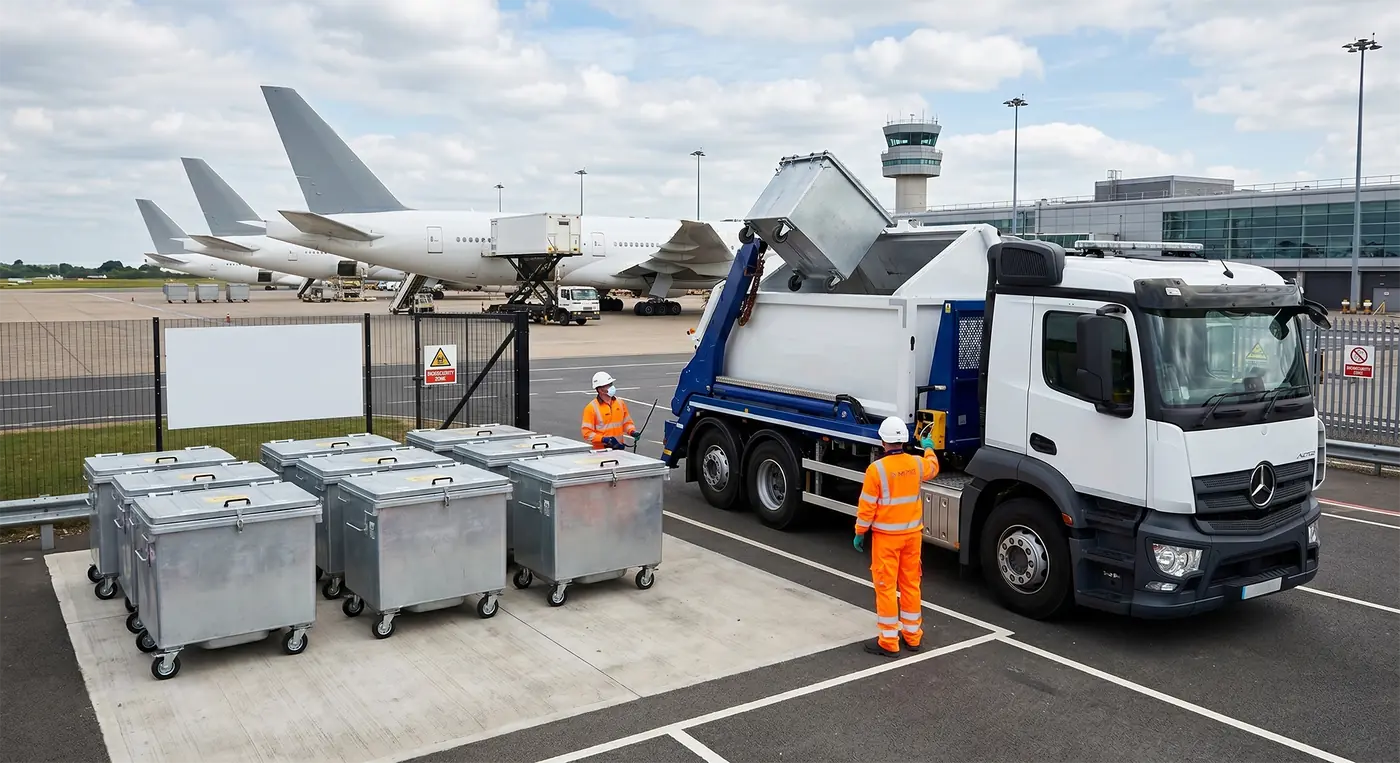
Licensed collection and carrying of international catering waste and animal by-product waste, including guidance on ABP categories, ICW classification, and compliant handling for high-risk waste streams.
ABP categories explained
ABPs are divided into three categories according to the level of risk they pose to human health, animal health and the environment. The category determines how the material must be handled, stored, transported, processed or disposed of.
Category 1 ABPs are classed as high risk.
They include:
- carcasses and all body parts of animals suspected of being infected with TSE (transmissible spongiform encephalopathy)
- carcasses of wild animals suspected of being infected with a disease that humans or animals could contract
- carcasses of animals used in experiments
- parts of animals that are contaminated due to illegal treatments
- international catering waste
- carcasses and body parts from zoo and circus animals or pets
- specified risk material (body parts that pose a particular disease risk, eg cows’ spinal cords)
Category 2 ABPs are classed as high risk.
They include:
- animals rejected from abattoirs due to having infectious diseases
- carcasses containing residues from authorised treatments
- unhatched poultry that has died in its shell
- carcasses of animals killed for disease control purposes
- carcasses of dead livestock
- manure
- digestive tract content
Category 3 ABPs are classed as low risk.
They include:
- carcasses or body parts passed fit for humans to eat, at a slaughterhouse
- products or foods of animal origin originally meant for human consumption but withdrawn for commercial reasons, not because it’s unfit to eat
- domestic catering waste
- shells from shellfish with soft tissue
- eggs, egg by-products, hatchery by-products and eggshells
- aquatic animals, aquatic and terrestrial invertebrates
- hides and skins from slaughterhouses
- animal hides, skins, hooves, feathers, wool, horns, and hair that had no signs of infectious disease at death
- processed animal proteins (PAP)
International Catering Waste
International catering waste (ICW) is food waste from international transport vehicles including:
- cruise ships
- airlines
- private or commercial yachts and boats
- armed forces ships and submarines
- ferries
Food and drink is not considered ICW until it is no longer intended for human consumption or has been mixed with food waste. For example, a carton of milk is considered ICW only when thrown away.
ICW is a high-risk category 1 animal by-product (ABP).
ICW includes all food waste from planes, vehicles or ships travelling internationally and within EU territory.
Food waste from planes, vehicles or ships is classified domestic catering waste when:
- operating within the UK, Channel Islands and Isle of Man
- travelling from Northern Ireland to Great Britain
In accordance with the Northern Ireland protocol, the EU classifies food waste from planes, vehicles or ships travelling from Great Britain to Northern Ireland as ICW.